Sunday, August 19, 2012
Happy National Aviation Day!
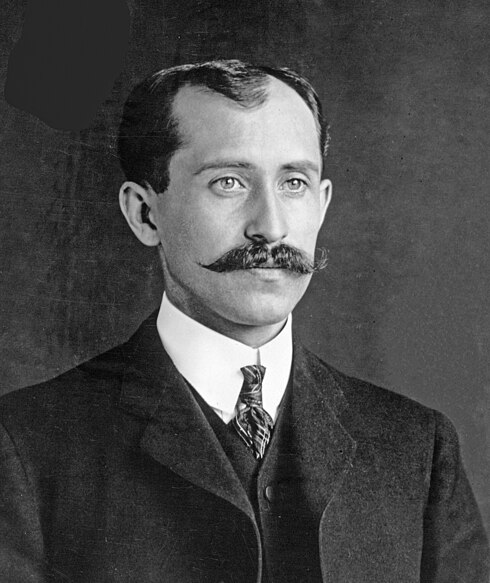
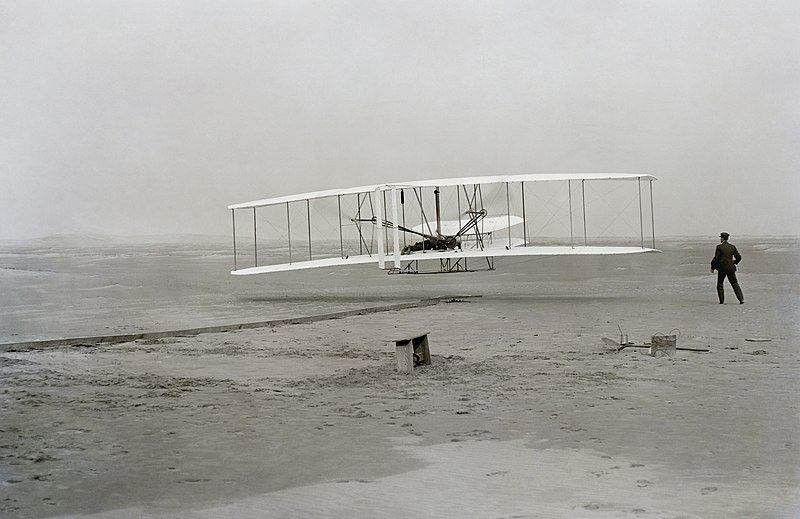
On August 19, 1871 Orville Wright was born (his brother Wilbur Wright was born April 16, 1867). December 17, 1903 Orville Wright, winning a coin toss between himself and brother Wilbur, became the first man to achieve and sustain powered flight in a heavier than air aircraft. In 1939, president Franklin Roosevelt declared August 19 to be National Aviation Day, honoring Orville Wright's historic accomplishment. This accomplishment changed the world in perhaps more ways than any event that has happened since. Aviation has advanced shipping, commerce, travel, military, etc. in so many ways. People can travel longer distances in shorter amounts of time. Remote areas where we have not been able to build rails or roads have become accessible. This day has been established to celebrate the history and achievements in aviation and among aviators. Even though this day has passed for many years with little acknowledgement, I will continue to blog about remarkable achievements made by aviators in history and in the present.
A short documentary on the first flight at Kitty Hawk.
Wednesday, June 20, 2012
Tools, "Washington Combination Pliers"
"Washington Combination Plier" by National Plier Company, Buffalo NY. Pat'd Nov. 19, 1907. This combination plier was Christopher Haeberli. The design is a combination tool including a plier, a hammer, a wire cutter, a shear or snips, a screw driver.
I found an article from an old journal "Metal Industry" (volume 13, March 1915)* that says; "Walter Hayes of the United States Cast Iron Pipe and Foundry Company has added to his many interests a partnership with Chris Haeberli, of the Washington Plating Works… In addition to their electroplating work they intend to manufacture what will be known as the "Washington Combination Pliers," invented by Chris Haeberli… They expect to market their article in the next two weeks."This confirms Christopher Haeberli was the inventor, and suggests the tool was on the market by April, 1915.
The patent date as marked on the tool makes the likely patent# 871585**. However there are a couple of discrepancies between this model and the drawing included with the patent. The drawing with the patent included a slip joint, as well as a rivet hammer on the opposite jaw of the tool.
*Metal Industry, Volume 13 (March, 1915)
**Patent#871585
A similar plier with a an excerpt from "Hardware Dealers' Magazine" July, 1915 on Flicker
Sunday, June 3, 2012
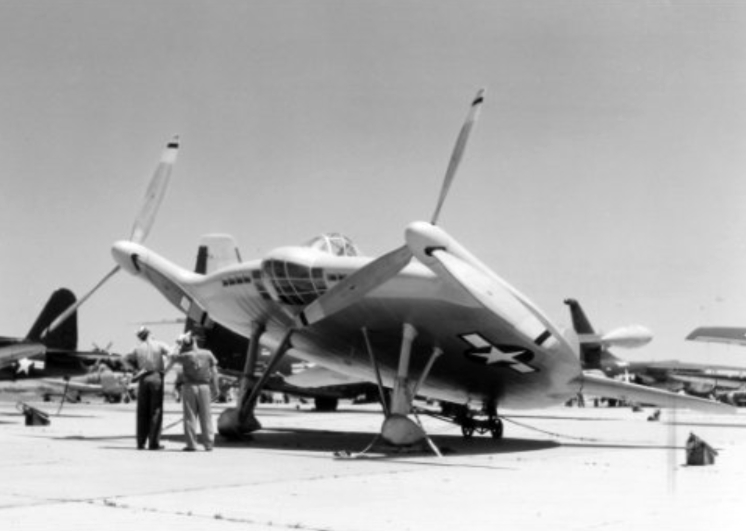
Aviation: "Flying Pancake"
The Vought V-173 was an amazing and practically forgotten experiment in aviation during World War 2. This experiment was developed and designed by Charles H. Zimmerman, and the prototype was piloted by legendary pilots Boone Guyton and Charles Lindbergh. Rather than conventional wings, the body of the V-173 was a discoidal symmetrical airfoil. The plane was powered by 2 80 horse-power continental engines spinning 2 propellers. Test flights of the V-173. It is likely that test flights (during 1942 to 1943) were reported as UFO sightings.
Zimmerman's accomplished some amazing feats in his design. The V-173 had near vertical take off and landing capabilities (very impressive for a propeller plane) and handled very well at low speeds. The plane was noted for being very difficult to stall. In addition, the structure of the plane turned out to be remarkably strong. The V-173 also successfully demonstrated Zimmerman's idea of in using the propellers to counter the wing-tip vortices.
The proto-type V-173 lead to the development of the Vought XF5U-1, funded by the United States Navy as a fighter plane. While the V-173 was a wood and fabric airframe, the XF5U-1 was as an all metal construction. This promising design, while it tested in taxi, ground runs, and short hops never actually made a true flight. The project was canceled in 1948 as the Navy was replacing fighter propeller-planes with jet aircraft. The only completed XF5U-1 was destroyed by a wrecking ball. The V-173 however survived in storage. Today it belongs to the Smithsonian National Air and Space Museum. According to the Smithsonian website, the V-173 is "not on display at the National Air and Space Museum; it is either on loan or in storage."
Short video clip on the Vought V-173
http://www.youtube.com/watch?v=LfpTDOAfj7Y
Gudaitis, Frank. "Charles Zimmerman and his "Skimmer." Flight Journal; April, 2005.
Wednesday, May 2, 2012
Aviation - 60th anniversary…
On May 2, 1952 the de Havilland Comet took off from London with the final destination of Johannesburg, South Africa (though not a non-stop trip). This was the first passenger flight in a commercial airliner, powered only by turbine engines. Here is a short documentary that was made during the historic flight itself. Because it was filmed during the historic flight, it tells the story better than I can and offers a valuable historical perspective during that time.
Subscribe to:
Posts (Atom)